
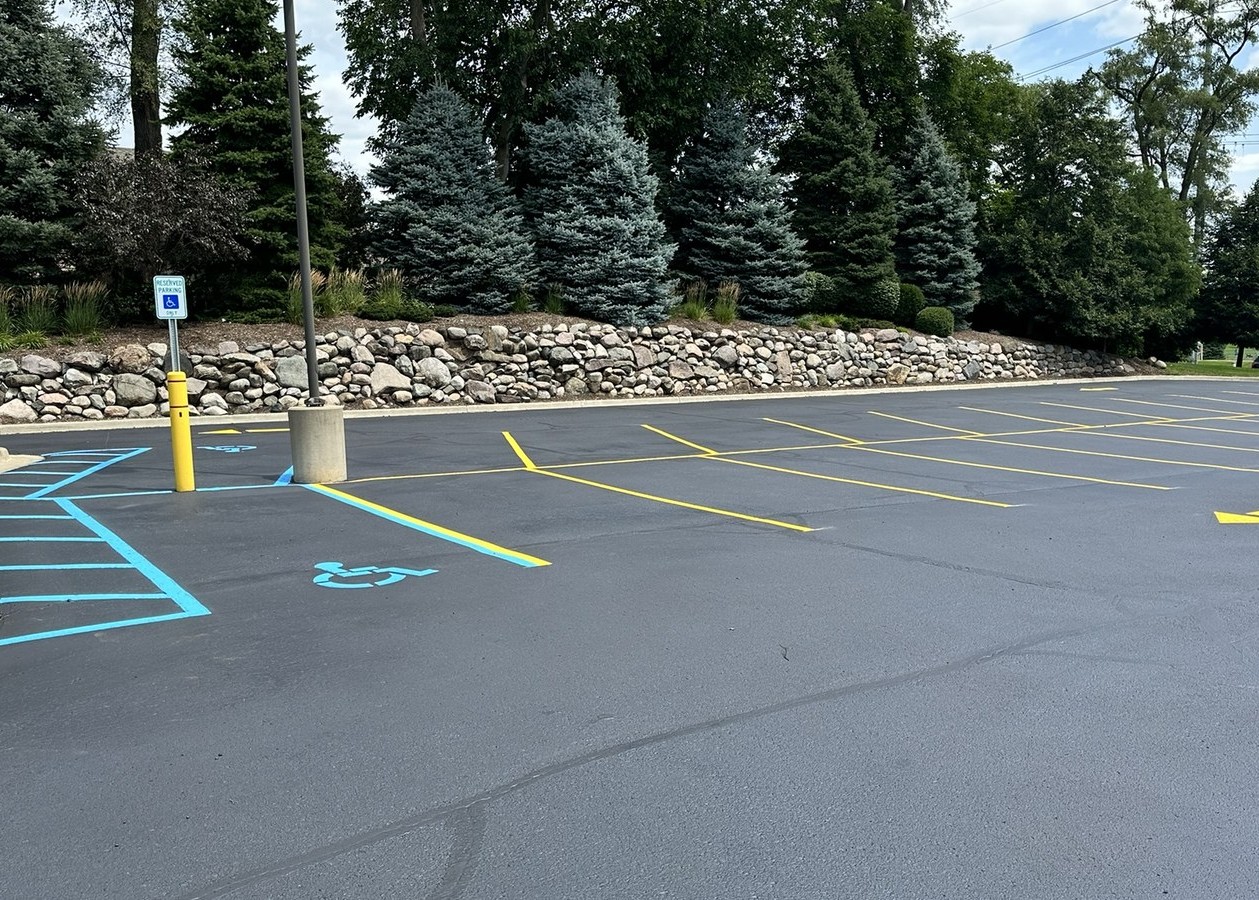
A parking lot that meets the ADA has the right number of accessible spaces, van spaces, marked access aisles, proper signs and nearly level ground. Most problems show up in a quick walk of the lot, and many are fixed with fresh ADA parking lot striping and a few signs.
Since 1979, our Troy, MI commercial paving contractors have helped office parks, retail centers and multi-tenant properties keep their lots safe and accessible.
Here's what to check on your property.
Count the Accessible Spaces in Each Lot
The 2010 ADA Standards set a minimum number of accessible spaces based on how many spaces each lot has. A lot with 1 to 25 spaces needs one, a lot with 76 to 100 needs four, and a lot with 401 to 500 needs nine.
The count applies to each lot or garage separately, not to the whole site. The lists the full table, including the 2 percent rule for lots with 501 to 1,000 spaces.
Make Sure Enough Spaces Are Van Accessible
At least one of every six accessible spaces must be van accessible. Even a lot with one accessible space needs it to fit a van.
A van space can be 132 inches wide with a 60-inch aisle, or 96 inches wide with a 96-inch aisle. It also needs 98 inches of vertical clearance, which matters under canopies and in parking decks.
Measure the Spaces and Access Aisles
Car-accessible spaces must be at least 96 inches wide, with an access aisle at least 60 inches wide. The aisle has to run the full length of the space and sit level with it.
Faded aisle markings are easy to spot. If drivers can't tell the aisle is off-limits, they park in it, and the space stops working for a wheelchair user.
Check Slope and Surface Condition
Accessible spaces and aisles can't slope more than 1:48 in any direction, which is roughly 2 percent. The surface also has to be firm, stable and slip-resistant.
Heaved asphalt, potholes or a settled concrete ramp can push a space out of compliance. Our commercial concrete services cover ramps and sidewalks, and our full list of services shows how paving and concrete work fit together.
Look at Every Sign
Each accessible space needs a sign with the international symbol of accessibility, mounted at least 60 inches above the ground to the bottom of the sign. Van spaces need a second sign that reads "van accessible."
Signs get bent by plows and faded by sun, so add them to your spring walk-through. Clear signs and crisp lines work together, which is why professional line striping matters for safety and liability.
Plan ADA Updates Around Paving Work
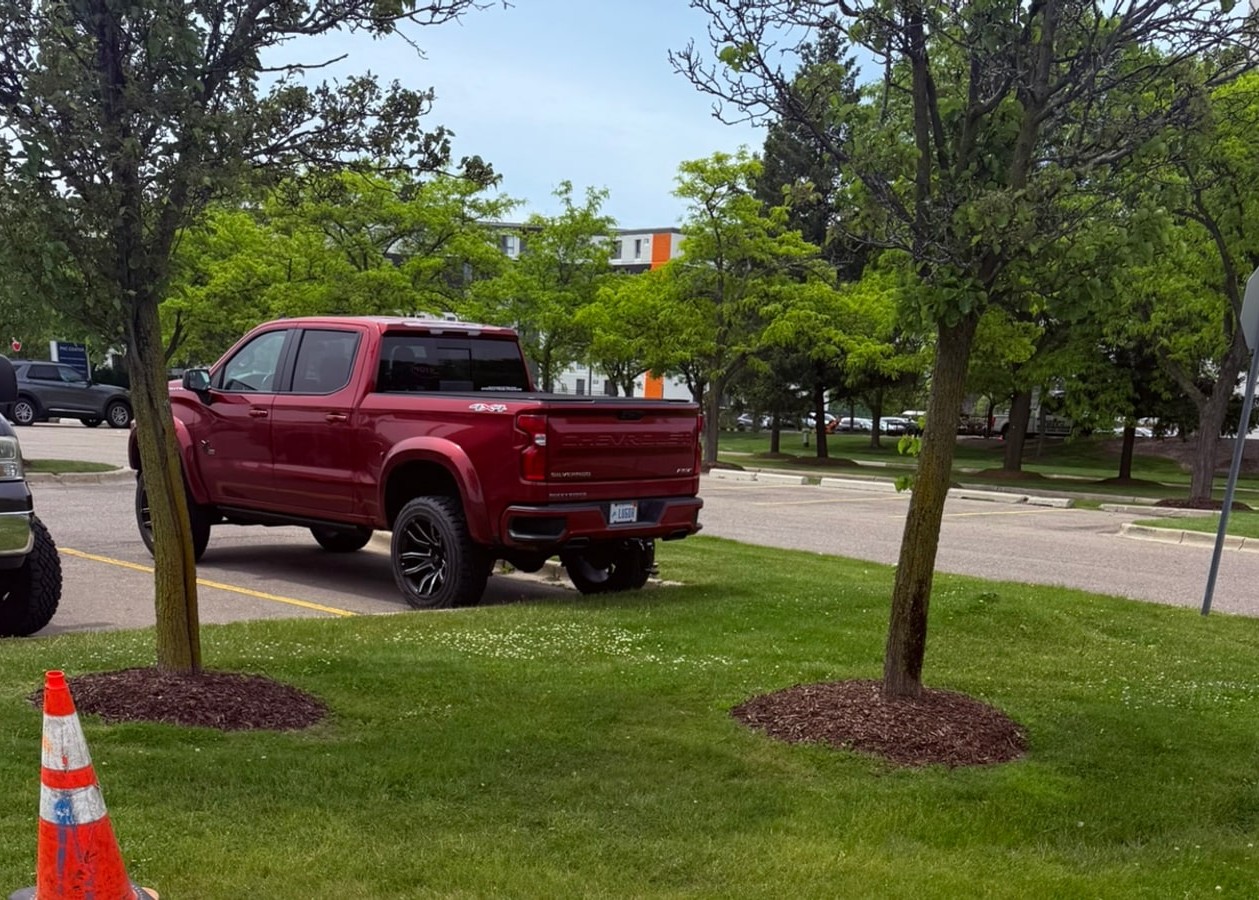
The treats resurfacing or resealing a lot as an alteration, so the work must include the required accessible spaces.
That makes a sealcoat or repave the natural time to correct counts and layouts. If you're weighing the best time to sealcoat or watching the signs it's time to repave, build the ADA review into that plan.
This is a general checklist, not legal advice, and local codes can add requirements.
Frequently Asked Questions
Does repainting faded handicap stripes count as an alteration?
Usually not, since repainting existing striping in place for a few spaces is generally treated as normal maintenance, along with pothole repair and surface patching. That changes if the work affects how usable the parking area is, so any change to the layout deserves a closer look before crews start.
The U.S. Access Board explains this split in its guide to parking.
Do multi-lot properties count accessible spaces together?
No. Each parking lot or garage gets its own count, even when several lots serve one building or one tenant mix. A property with a front lot and a rear lot checks each against the table on its own, and every lot needs at least one van-accessible space once accessible spaces are required there.
ADA.gov covers this in its compliance brief on restriping.
Does Michigan add its own rules for accessible parking?
It can, and so can your city, since federal guidance notes that state or local laws may set the color and manner used to mark accessible spaces and access aisles. Before a restripe, it's worth asking your local building or code office whether anything beyond the federal minimum applies to your property in Troy or nearby communities.
What paint does American Asphalt use for ADA striping?
American Asphalt Paving & Sealcoating uses high-quality traffic-rated paint applied with professional-grade airless striping equipment. That covers ADA-compliant handicap markings, reserved parking signage, fire lanes and directional arrows.
Heavy paint application helps lines stand up to daily traffic and Michigan weather, so access aisles and space markings stay readable between maintenance cycles.
Can a sunken ramp or sidewalk near accessible spaces be fixed?
Yes. Concrete that has shifted or sunk around a ramp usually points to a compromised base, so the long-term fix is removing the damaged section and pouring new concrete. American Asphalt Paving & Sealcoating handles ramps, sidewalks, curbs and flatwork for commercial properties, with work built to meet ADA and drainage standards.
Get an ADA Parking Check Before Your Next Project
A short review now can save a costly redo later. Ask our Troy, MI asphalt paving company to look at your lot alongside your next striping, sealcoating or paving project.
Call American Asphalt Paving & Sealcoating today at (248) 879-5900 or request a quote online.